
Roof algae and black streaks, at a glance
Those black streaks are almost always algae that feeds on the limestone filler in asphalt shingles and grows well in St. Louis humidity. Algae on its own rarely damages a roof, but moss can, and the wrong cleaning method can strip years off your shingles. Call (314) 429-6000 if you want someone to look.
Why it shows up on your roof
St. Louis summers give algae what it needs: warmth, moisture and shade.
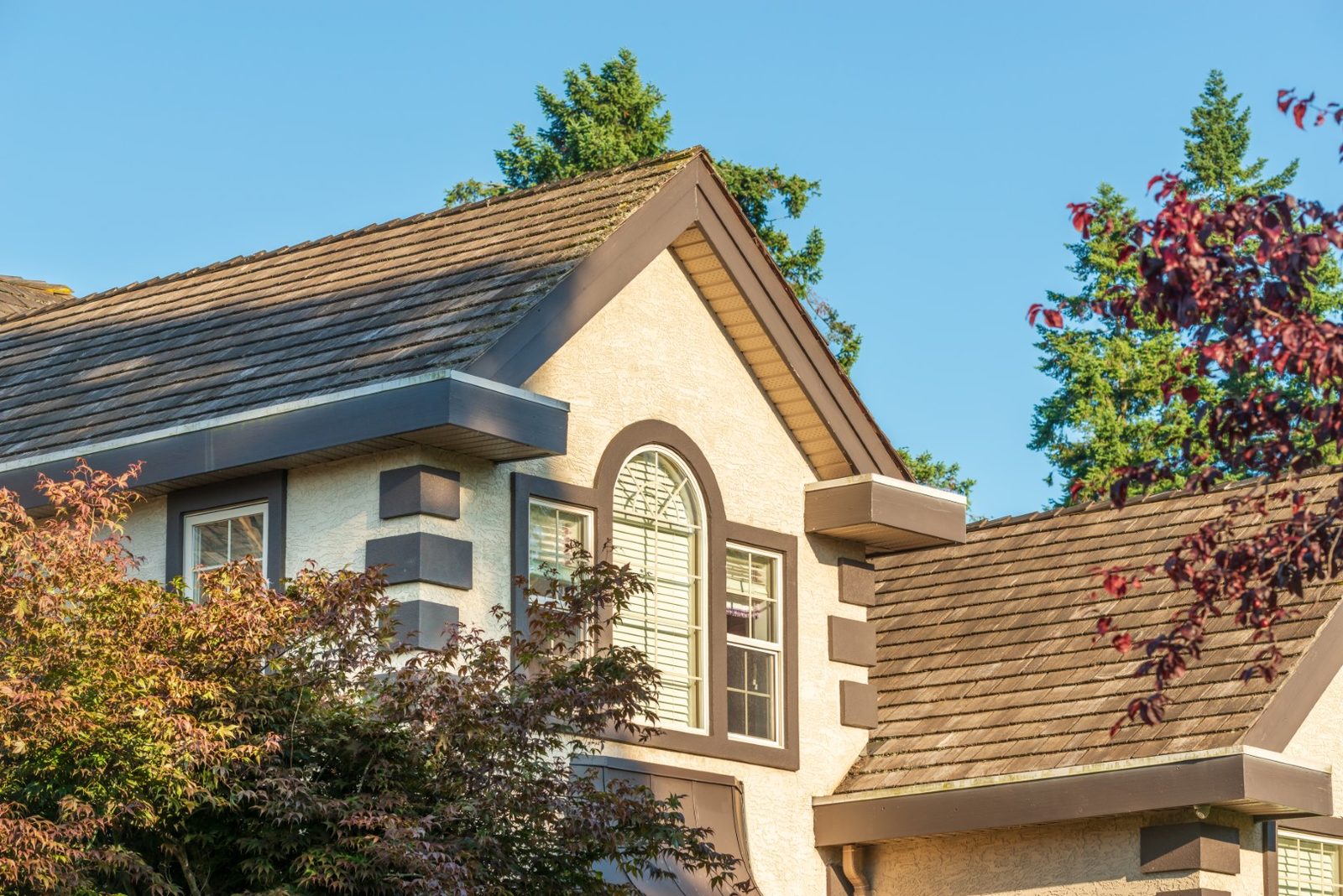
The streaks usually appear first on north-facing slopes and under trees, where the roof stays damp longer after rain or morning dew. Spores are carried by wind and animals from roof to roof, which is why entire streets can show the same pattern. The dark color is a protective coating the algae produces against sunlight.
Moss is a different matter. It grows in thicker clumps, usually in heavy shade, and it holds water against the shingles like a sponge. Over time it can lift shingle edges and let water get underneath. If you see green, raised growth rather than flat dark staining, that deserves attention sooner.
Algae versus other roof stains
Not every dark mark is algae. Here is how we tell them apart on an inspection.
Algae streaks
Flat, dark, vertical streaks, worst on north slopes. Mostly cosmetic.
Moss
Green, raised growth that can lift shingles and hold moisture. Should be removed.
Granule loss
Bare, dark patches where the protective granules have worn away. A sign of aging or hail.
Hail bruising
Random dark spots with soft centers, often on all slopes after a storm.
Lichen
Crusty, gray-green circles that bond tightly to shingles. Removal can damage the surface.
Water staining
Discoloration around flashing or valleys that may point to a leak.
How to clean it without damaging the roof
Never pressure wash an asphalt shingle roof. High pressure blasts off the granules that protect the shingle from the sun, and it can force water under the shingles. A low-pressure wash with a cleaning solution made for roofs is the safer approach, followed by a gentle rinse. Protect plants below, because runoff from some cleaners can harm them.
Cleaning is a temporary fix. The algae usually returns within a few years if conditions stay the same. Trimming back overhanging branches lets more sun reach the roof. Strips of zinc or copper installed near the ridge release metal ions when it rains, which slows regrowth on the slopes below.
- No pressure washing on asphalt shingles
- Low-pressure cleaning with a roof-safe solution
- Trim branches that keep the roof shaded and damp
- Stay off steep or wet roofs and call a roofer instead
Roof algae at a glance
| Common name | Roof algae, black streaks |
|---|---|
| Where it grows | North-facing and shaded slopes |
| Damage risk | Low for algae, higher for moss |
| Safe cleaning | Low-pressure wash with roof-safe cleaner |
| Unsafe cleaning | Pressure washing, scraping |
| Prevention | Tree trimming, zinc or copper strips, algae-resistant shingles |
| Usually covered by insurance? | No, it is considered maintenance |
When it is time for a new roof
If your roof is near the end of its life anyway, cleaning may not be worth the money.
Many shingle lines, including Owens Corning products we install, are available with algae-resistant granules designed to slow staining. If you are planning a roof replacement in St. Louis, it is worth asking for them, especially for shaded houses.
John Beal Roofing has been family-run since 1947 and is now in its third generation. We are an Owens Corning Platinum Preferred Contractor, BBB A+ rated and named to Roofing Contractor Magazine's Top 100. Our inspections are free, we answer the phone 24 hours a day, and every roof we install carries a lifetime workmanship warranty. Seasonal tips are on our roof maintenance page.
Roof algae and black streaks questions
Do black streaks mean my roof is failing?
Can I pressure wash my roof?
Will algae come back after cleaning?
Is moss worse than algae?
Will you inspect my roof for free?
Ask about roof streaks or moss
Fill this out and we'll call you back. If water is coming in right now, phone us instead so we can move faster.
Not Sure What Those Streaks Mean?
We will look at your roof for free and tell you if it is cosmetic or a problem.