
Storm Damage Roof Repair in St. Louis, at a glance
The work includes document every slope with photographs. Someone answers the phone at (314) 429-6000 at any hour.
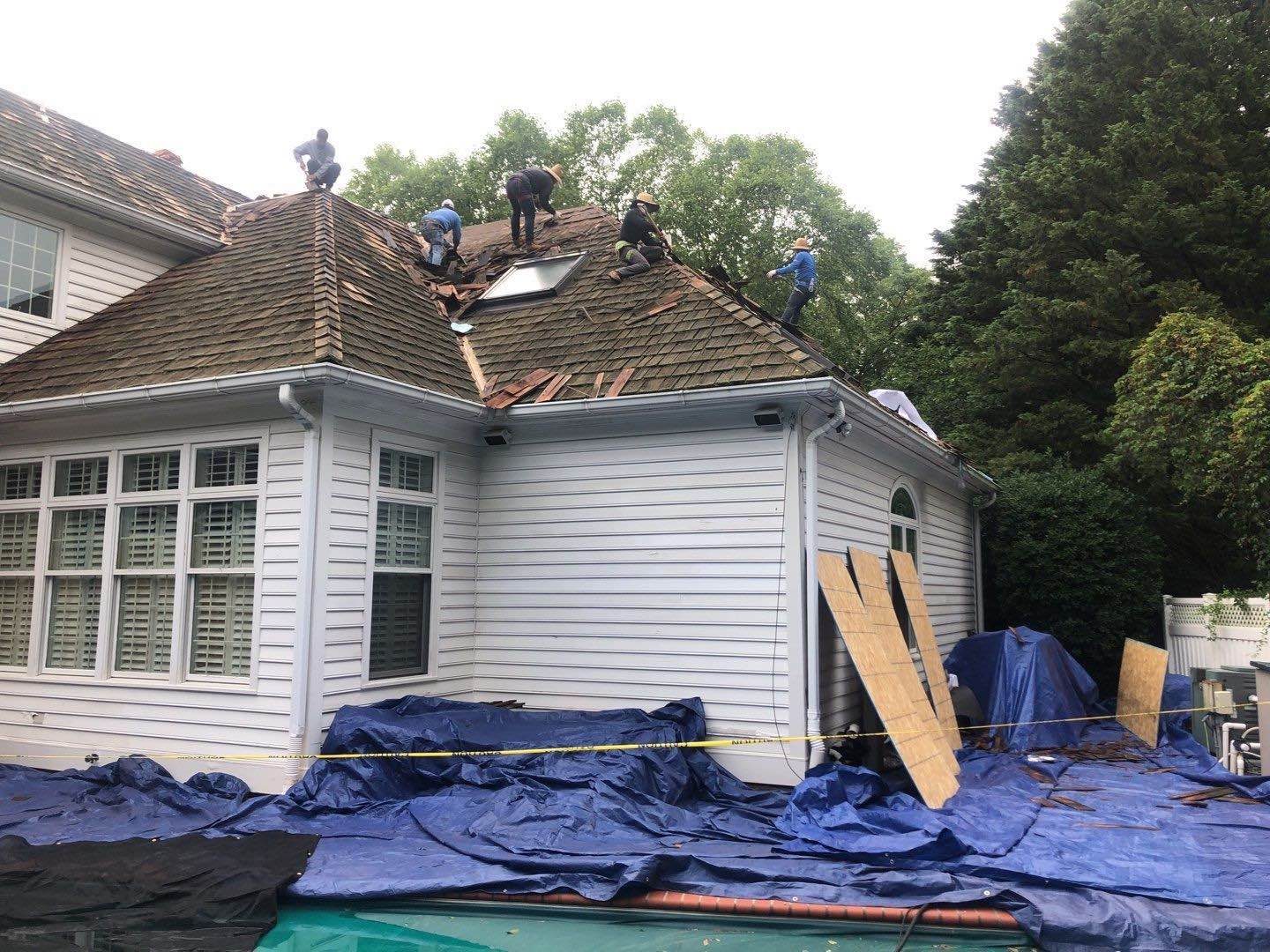
Signs you need storm damage repair
- Dents in gutters, downspouts or vent caps
- Shingles creased along the nail line
- Granule loss concentrated on one slope
- Debris impact marks
- Neighbors with roofing signs in their yards
What you're paying for with storm damage repair
What's included: document every slope with photographs, mark test squares, measure wind creasing and seal-strip failure, write the scope against actual damage, and meet the adjuster on the roof.
If the decking turns out to be rotten once it is exposed, work pauses so you can see it before we replace anything. No surprise line items appearing on the final invoice.
Where we do this work
We cover the metro on both sides of the river - St. Louis City and County, St. Charles County, Jefferson County, and Madison and St. Clair County in Illinois. Offices in Maryland Heights, Chesterfield, Festus and Edwardsville.
Related pages
St. Charles roofing
Local conditions and what we find on roofs there.
Every city we cover
The full metro on both sides of the river.
How the job runs
From the first call to the magnet sweep at the end.
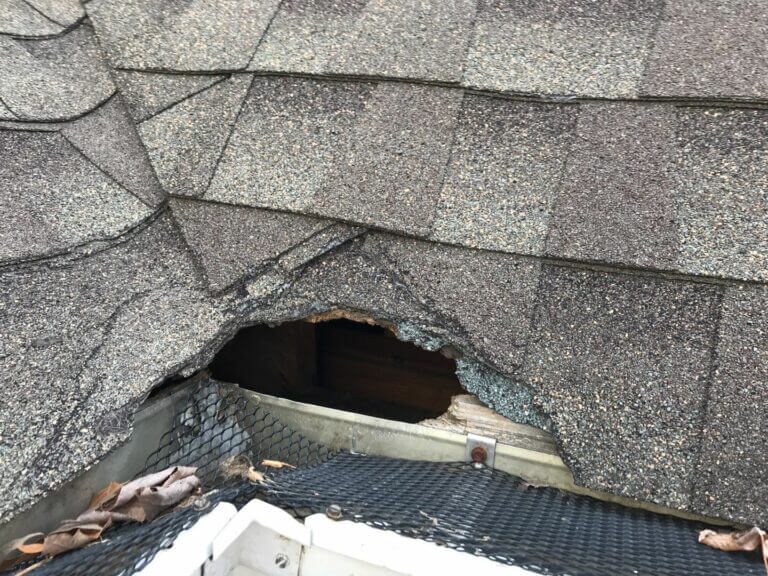
Wind damage, and how a claim gets built
Wind damage is often invisible from the ground, and it is the failure most likely to go unnoticed until it rains.
Wind does not usually tear a roof off. What it does is break the seal. Every asphalt shingle has an adhesive strip bonding it to the course below, and once that bond breaks the shingle is effectively a flap. It lies back down and looks completely normal from the driveway. The next wind lifts it again, and rain goes underneath.
The physical tell is a crease, a horizontal fold line across a shingle where it bent back on itself. A creased shingle has a fractured mat and will not reseal. It is compromised whether or not it is out of place. We lift and check by hand along the rakes, the eaves and the ridge, because that is where uplift is strongest.
Missing shingles are the easy version. The harder and far more common version is a field full of unsealed ones, which is how a roof passes a glance while it is actively failing. We check seal by lifting tabs across each slope and seeing what releases under light pressure.
Ridge caps go first on most roofs, being the most exposed and the most likely to be under-fastened. Then rake edges, then anything downwind of an obstruction that accelerates air over it.
The rest of the property tells the story. Fence sections down, tree limbs, siding or soffit panels pulled loose, a gutter run sagging, damaged screens, debris strike marks on the roof surface. We photograph all of it, because a claim is stronger when the roof damage sits inside a picture of a storm that plainly happened.
For the insurance file we document every slope with photographs, mark test squares, measure creasing and seal-strip failure, and write the scope against the actual damage rather than against a template. We tie it to the dated event and meet the adjuster on the roof to walk it together, because disagreements resolve faster standing on the shingles than they do over email.
If water is coming in now, that comes first and the paperwork waits. We tarp properly, fastened to structure rather than weighted down with bricks, so the temporary fix survives the next system coming through.
Storm Damage Roof Repair questions
What proves the damage is real and not a sales tactic?
What does storm damage repair cost in St. Louis?
On an approved storm claim your cost is typically the deductible plus any upgrades. Where the damage falls under the deductible, we will tell you that rather than pushing a claim.
Do you offer financing?
We do, and on storm work the financing question is usually the deductible and anything the carrier declined to cover. We go through both figures with you.
How soon can you start?
Emergency stabilization happens same day where conditions allow. Permanent repairs follow the adjuster and the queue, which after a major event across the metro is genuinely long.
Will insurance pay for this?
Storm damage tied to a dated event is the clearest claim there is, and usually yes. We identify the date, document to carrier standards and meet your adjuster on the roof.
Free storm damage repair estimate
Fill this out and we'll call you back. Leaking right now? Skip the form and call so we can move faster.
Need A Roofer In St. Louis?
One free inspection replaces a week of guessing. Photos of the real condition and a written price, no obligation.