
St. Louis roof maintenance, at a glance
A St. Louis roof needs four things each year: gutters cleared twice, sealant and flashing checked after storm season, attic ventilation and insulation verified before winter, and an inspection after any hail or high-wind event. Do those and you get the years the shingle was rated for. Skip them and you don't. Free inspections at (314) 429-6000.
Spring: after the storms start
Storm season here runs hard from March through June. After any event with hail or wind over about fifty miles an hour, walk the perimeter and look for granules washed into the gutter troughs and at the base of downspouts. Look at soft metals too. Dented gutter aprons, vent caps and air conditioner fins tell you hail actually fell on your property.
What you can't see from the ground is a creased shingle, which lies back down and looks normal even though its sealant bond is broken. That's the free inspection's job. Filing sooner is better than filing later, because policy deadlines vary and evidence weathers.
Spring is also when winter's damage surfaces. Freeze-thaw cycles work water into hairline cracks in chimney crowns and mortar joints, and by April a small crack has become an open path.

Summer, fall and winter
Each season stresses a different part of the roof. Here's what each one asks for.
Summer heat
Attic temperature is the enemy. Check that soffit intake isn't blocked by insulation and that the ridge or box vents are clear.
Summer storms
Straight-line wind takes ridge caps first. Look along the ridge line after a strong evening storm.
Early fall
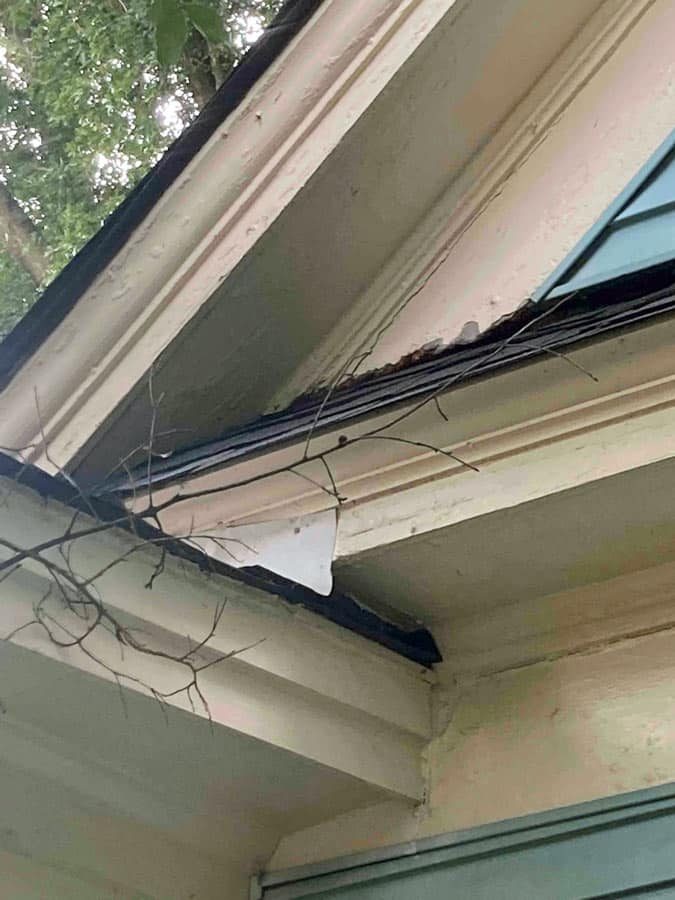
Trim limbs back from the roof plane before the leaves drop. Branches abrade granules every time it blows.
Late fall
Clear gutters and valleys after the last leaf drop, not during it. Packed valleys hold water against the shingles.
Winter freeze-thaw
Ice at the eaves means heat is escaping into the attic. That's an insulation and ventilation problem, not a roof problem.
Any season
Ceiling stains, a musty attic smell or daylight through the deck all mean call now rather than in spring.
The annual checklist
- Gutters cleared twice a year, spring and after leaf drop, with downspouts flushed and discharging away from the foundation.
- Valleys clear of packed debris, since standing debris holds moisture against the granules.
- Plumbing vent boots checked for cracked rubber collars, the single most common leak source on a mid-life roof.
- Chimney crown and counter-flashing inspected for open joints and failed sealant.
- Attic checked for daylight, damp sheathing, rusted nail tips and compressed insulation over the soffit vents.
- Ridge and hip caps checked after every high-wind event.
- A documented inspection after any hail event, whether or not you plan to file.
What to leave to a roofer
| Safe from the ground | Gutter and downspout checks, perimeter walk, soft-metal dent check, attic inspection |
|---|---|
| Needs a roofer | Anything requiring you to walk the roof, especially wet or steep surfaces |
| Never DIY | Flashing rebuilds, pressure washing shingles, sealing over active leaks with roof cement |
| Ice dams | Treated as an insulation and ventilation issue, not chipped off with tools |
| Inspection cost | Free, with photographs of every slope |
| Emergency line | (314) 429-6000, answered live 24 hours a day |
Maintenance we do, and what we won't sell you
We'll clear valleys, replace failing boots, rebuild flashing, correct ventilation, reseat ridge caps and repair isolated slope damage. Those jobs extend a roof's life for a fraction of a replacement, and we'd rather do them than sell a tear-off five years early.
What we won't sell you: shingle coatings that promise to add a decade, pressure washing, or a full replacement for a roof with real service left in it. If an inspection ends with us saying the roof is fine and here's the one boot to change, that's a good outcome.
Free St. Louis roof inspection / Attic ventilation / Seamless gutters
Roof maintenance questions
How often should a St. Louis roof be inspected?
Are gutter guards worth it?
What causes ice dams and can a new roof stop them?
Heat escaping into the attic melts snow, the water runs to the cold eave and refreezes. A new roof alone doesn't fix that. Air sealing, insulation and balanced ventilation do, and ice and water membrane at the eaves protects the deck while you correct the cause.
Can I walk my own roof to check it?
Does maintenance affect my shingle warranty?
Book a free roof inspection
Tell us the age of the roof and anything you've noticed. We'll photograph every slope and put the findings in writing.
Keep The Roof You Have
Maintenance costs a fraction of a replacement. Free inspection, photographs, and an honest answer on remaining life.