
Commercial Roofing in St. Louis, at a glance
The work includes membrane repair and replacement. Someone answers the phone at (314) 429-6000 at any hour.
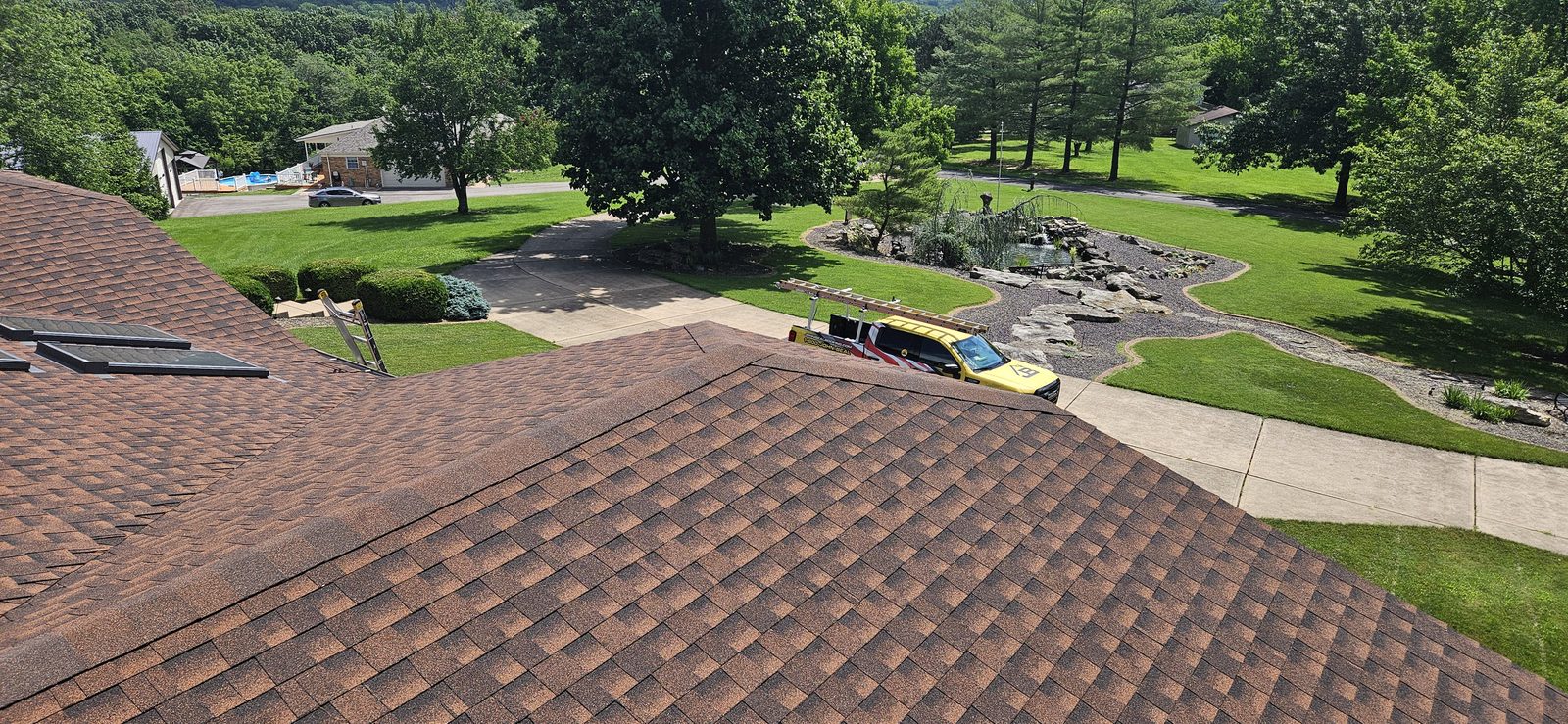
Signs you need commercial roofing
- Tenant complaints about leaks
- Ponding on a membrane roof
- Rooftop equipment installed without proper flashing
- A roof that needs phasing across budget years
- Deferred maintenance catching up
How we do commercial roofing
The scope, plainly: membrane repair and replacement, drain and scupper work, HVAC curb flashing, maintenance programs and phased schedules that work around the tenants and the operating hours.
Every component goes on to manufacturer specification, since that is what keeps the material warranty valid. Nailing and underlayment shortcuts void coverage, and years later the homeowner is left holding the problem.
Where we do this work
We cover the metro on both sides of the river - St. Louis City and County, St. Charles County, Jefferson County, and Madison and St. Clair County in Illinois. Offices in Maryland Heights, Chesterfield, Festus and Edwardsville.
Related pages
Bridgeton roofing
Local conditions and what we find on roofs there.
Every city we cover
The full metro on both sides of the river.
How the job runs
From the first call to the magnet sweep at the end.
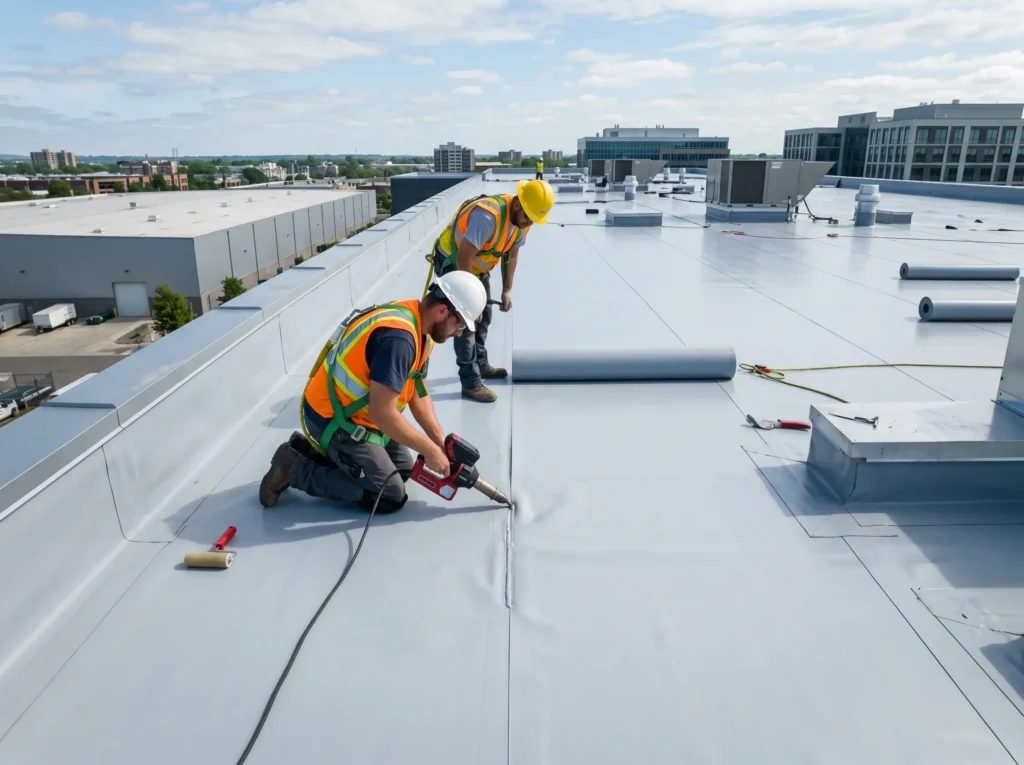
Replacing a roof over an occupied building
On commercial work the roof is rarely the hard part. Keeping the tenants open while it happens is.
Most commercial roofs in this metro are low-slope membrane, and most of the ones we get called to are not failing across the whole field. They are failing at the details: seams, terminations, drains, and the curbs under rooftop equipment. That distinction decides whether an owner is looking at a repair program or a capital replacement, and it is worth settling before anybody writes a number.
Ponding is the first thing we check. Water standing more than about forty-eight hours after rain means the slope or the drainage is not doing its job, and standing water finds every marginal seam eventually. Sometimes that is a clogged drain or a crushed scupper. Sometimes it needs tapered insulation to build slope into a deck that never had any.
Rooftop equipment is the other usual suspect. HVAC units get installed, serviced and replaced by trades who are not roofers, and curbs get cut, penetrated and flashed by whoever happened to be on site that day. We see a lot of membrane opened for a condensate line or a gas run and closed up with sealant. Those hold for about a season.
Membrane choice follows the building. Single-ply TPO and PVC cover most of what we do, heat-welded at the seams with proper terminations at every edge, curb and penetration. Modified bitumen goes where heat welding is impractical or where the existing assembly calls for it. PVC has the advantage wherever there is grease or chemical exhaust, a restaurant or a plant, because TPO does not tolerate that well over time.
Scheduling is the part that matters to an owner. Work gets phased around operating hours, deliveries staged so the lot stays usable, and sections opened only as far as they can be dried in the same day. In multi-tenant buildings we sequence by tenant so nobody loses access without notice.
Budget cycles are real and pretending otherwise helps nobody. Where a full replacement does not fit this year, we will scope it in phases across budget years, in an order that spends the money on the sections actually leaking, and put a maintenance program on the rest so the deferred half does not turn into an emergency in the meantime.
Commercial Roofing questions
Do I need to be home?
No. We coordinate with your facilities contact or property manager rather than needing an owner on site, and we walk the finished roof with whoever you designate.
How far out do you travel?
What warranty comes with it?
Manufacturer system coverage on the membrane plus our own workmanship warranty on the installation, with the available term depending on the system and thickness specified.
How can I tell the damage is real and not a sales pitch?
What does commercial roofing cost in St. Louis?
It depends on the system, the square footage, the insulation and deck condition, and whether a recover is possible. We survey the roof and put a written scope in front of you rather than quoting a per-square number that moves later.
Free commercial roofing estimate
Fill this out and we'll call you back. Water coming in right now? Call instead, it is faster.
Need A Roofer In St. Louis?
One free inspection replaces a week of guessing. Photos of the real condition and a written price, no obligation.