
Winter Roof Maintenance In St. Louis, at a glance
Winter roof maintenance in St. Louis is mostly about two things: keeping the attic cold and dry so ice dams never form, and getting failed flashing fixed before the first freeze-thaw run. We inspect free through fall and winter, and a person answers (314) 429-6000 at any hour if something fails mid-storm.
Why our winters do the damage they do
A place that stays at ten degrees all winter is easier on a roof than St. Louis. We cross the freezing line constantly, sometimes twice in a day. Water finds a hairline gap in a flashing joint, freezes, expands, and makes that gap slightly bigger. Then it thaws and does it again next week.
By March a joint that was watertight in November is not. That is why the leaks people report in spring often trace back to a defect that was already there in October and could have been caulked, flashed or replaced for a fraction of the eventual cost.
The fall checklist we run
This is what our free pre-winter inspection actually covers.
- Pipe boots checked for split rubber collars, the single most common leak we find
- Chimney counter-flashing checked for sealant-only repairs that are about to fail
- Valleys cleared of debris so meltwater has somewhere to go
- Ridge cap and rake edges checked for lifted, unsealed shingles
- Gutters and downspouts checked for pitch and blockage
- Attic inspected for frost, dark sheathing and blocked soffit intake
- Insulation depth noted where we can see it, since attic heat drives ice dams
- Any storm damage from the previous season documented with dates
Stopping an ice dam properly
Find the heat source
Recessed lights, bath fans venting into the attic, gaps around the chimney chase. Warm air leaks are the root cause.
Seal it
Air sealing the ceiling plane does more for ice dams than any product installed on the roof.
Insulate to depth
Under-insulated attics let heat straight into the deck. Depth matters more than brand.
Balance the ventilation
Intake at the soffit, exhaust at the ridge. Cold attic, cold deck, no melt, no dam.
What we fix in winter, and what waits
Emergency work never waits. If a shingle slope came off in a January wind event, we're out there covering it whatever the temperature. Same with an active leak. Those calls get answered live and dispatched the same way in winter as in June.
Full replacements are different. Asphalt shingles rely on a heat-activated sealant strip, and in a cold stretch that seal takes longer to set. We hand-seal where needed and we don't open a roof up ahead of snow. If your roof will hold until March, we'll tell you to wait and put that in writing.
Repairs sit in between. Most flashing and boot work is fine in cold weather. Flashing repair, leak repair.
Winter roof facts
| Main St. Louis risk | Freeze-thaw cycling, not sustained cold |
|---|---|
| Ice dam cause | Attic heat melting snow that refreezes at the cold eave |
| Ice dam fix | Air sealing, insulation depth, balanced intake and exhaust ventilation |
| Most common winter leak | Split pipe boot collar and failed chimney counter-flashing |
| Emergency service | 24/7, live phone, tarping in any weather that's safe to climb in |
| Inspection cost | Free, including the written report |
| Company | John Beal Roofing, family run since 1947, Owens Corning Platinum Preferred |
Snow load and when to worry
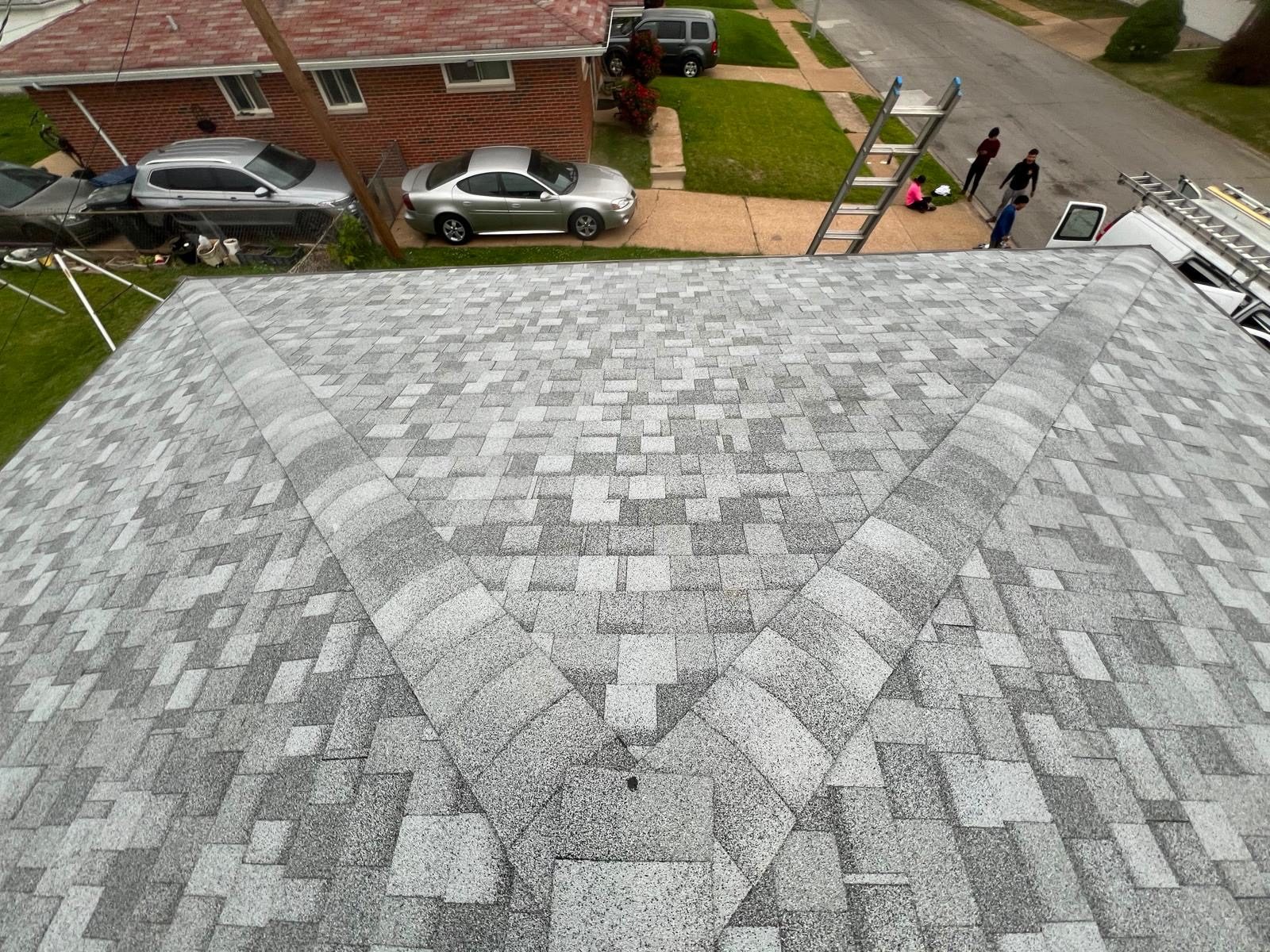
A typical St. Louis snowfall is not a structural threat to a sound residential roof. What does deserve attention is heavy wet snow followed by rain, and low-slope or flat sections where drainage is already marginal. Ponding that freezes adds weight in exactly the place least able to carry it.
If you have a flat section over a porch or addition, that's the part to watch. Flat roofing in St. Louis. And if a ceiling starts sagging or you hear framing creak, get out and call, don't investigate.
Winter roofing questions
What actually causes an ice dam?
Heat escaping into the attic melts snow on the upper roof. The water runs down to the cold eave, refreezes, and builds a ridge of ice. Water backs up behind it and gets under the shingles. It's an insulation and ventilation problem showing up as a roof problem.
Should I get up there and knock the ice off?
No. Chipping ice off shingles breaks them, and a ladder on frozen ground is how people get hurt. If a dam is already causing a leak, call us and we'll deal with it without destroying the roof.
Can you install a roof in a St. Louis winter?
Yes, with limits. Shingles need warmth to seal, so in a cold stretch we hand-seal the courses that need it. We won't tear off a roof into a snow forecast, so winter jobs get scheduled around the weather.
Do gutter guards prevent ice dams?
No. Guards keep leaves out. Ice dams are caused by attic heat, and the only durable fix is air sealing, insulation and balanced ventilation. Anyone selling guards as an ice dam cure is overselling them.
What should I check myself before winter?
From the ground: sagging gutters, missing shingles, and anything on the roof that wasn't there in September. From the attic on a cold day: frost on the underside of the deck, which means moist air is getting up there.
Free winter roof inspection
Book a look before the weather turns. We'll photograph the roof and tell you what needs doing, if anything.
Where we do winter inspections
Across the metro, in the cold, same free inspection:
Get Ahead Of A St. Louis Winter
One free inspection in the fall is cheaper than one ceiling repair in February.