
St. Louis roof flashing repair, at a glance
Flashing is the metal that seals every place a roof meets something else: a chimney, a wall, a valley, a skylight or a vent, and it is the source of most St. Louis roof leaks on shingles that still look fine. Rebuilding flashing correctly costs far less than a roof. Free inspection and written findings at (314) 429-6000.
The five joints that leak
Chimney flashing is the most common. Done right, step flashing runs up both sides woven into the shingle courses, an apron covers the front, a cricket sheds water at the back on wider chimneys, and counter-flashing is cut into the mortar joint above it. Done wrong, somebody ran a bead of roof cement around the base. That holds for a couple of years, then it cracks and the ceiling below the chimney chase gets a stain.
Sidewall step flashing is next, where a slope dies into a wall. Each piece has to lap the one below it, course by course. Continuous L-metal run in one strip behind the siding will leak.
Kick-out flashing is the piece most often missing entirely. At the bottom of a sidewall run, a small angled piece has to push water out into the gutter. Without it, every rain sends water behind the siding, and the damage shows up as rotted sheathing and interior mold years later. Then valleys, where open metal or a woven shingle detail can both work but neither tolerates debris, and skylights, where the flashing kit is a system and half of one leaks.
How we repair it
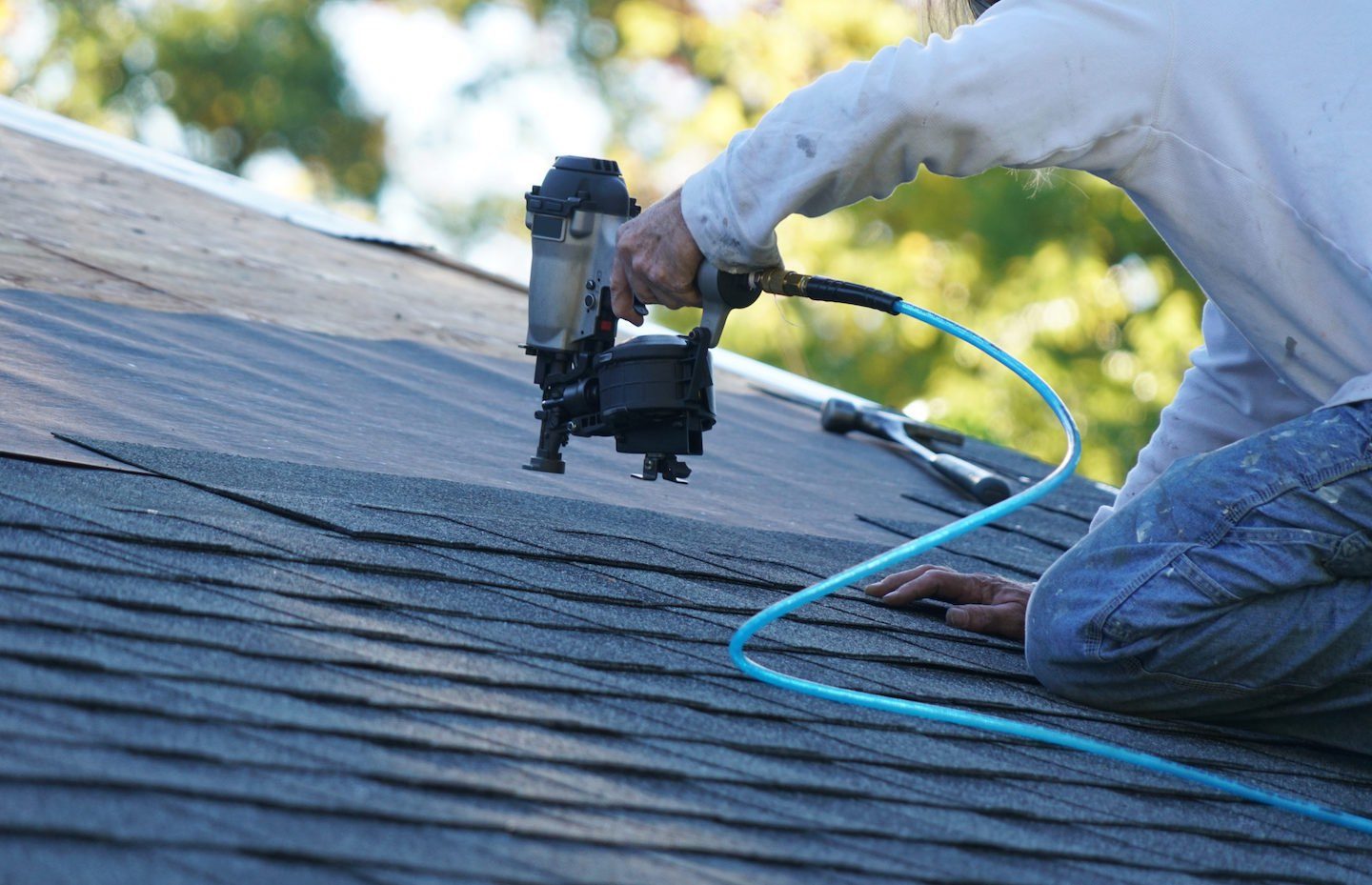
Metal gets replaced, not resealed. Sealant is the last inch of a detail, never the detail itself.
Chimney rebuild
New step, apron and counter-flashing cut into the mortar, plus a cricket where the width calls for one.
Sidewall correction
Proper stepped pieces woven into the courses, with a kick-out added at the bottom.
Valley metal
New metal, cleaned out and detailed so debris can't dam the channel.
Skylight flashing
Full kit replacement rather than patching one side of a system.
Pipe boots and vents
Cracked collars replaced with boots that outlast the shingles around them.
Deck repair beneath
Sheathing that has been wet for years gets cut out and replaced first.
Signs it's flashing and not shingles
- The stain sits below a chimney, a wall junction, a skylight or a vent rather than in the open field.
- It only leaks in driving rain from one direction, which points at a wall detail.
- Siding below a roof-to-wall junction is soft, stained or peeling paint.
- You can see roof cement smeared where metal should be.
- The shingles themselves look fine, with granules intact and no curling.
Flashing repair at a glance
| Most common failure | Chimney counter-flashing sealed on the surface instead of cut into the mortar |
|---|---|
| Most common omission | Kick-out flashing at the base of a roof-to-wall run |
| Typical duration | A few hours to most of a day depending on the detail and access |
| Materials | New metal every time; old flashing is not reinstalled under new shingles |
| Warranty | Lifetime workmanship warranty on our installation |
| Inspection | Free, with photographs of the failed detail |
| Service area | St. Louis City, St. Louis County, St. Charles County and the Metro East |
Why we replace metal instead of sealing it
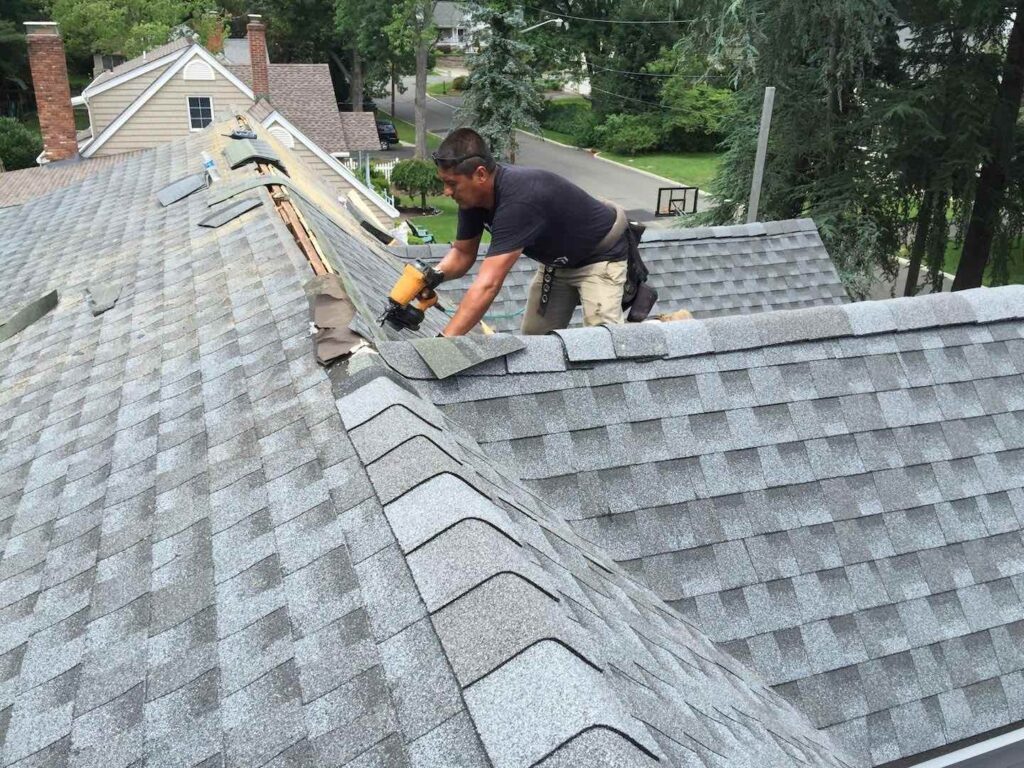
Sealant moves at a different rate than metal and masonry, and St. Louis runs through enough freeze-thaw cycles each winter to break that bond. A caulk repair on a chimney is a two-year fix sold as a permanent one.
New metal, correctly lapped and correctly fastened, sheds water because of its shape rather than because of an adhesive. That's the difference between a repair that holds and one that comes back. It's also why our workmanship warranty is lifetime, and why a company that's been family run since 1947 is still here to honor it.
Flashing repair questions
Can flashing be repaired without replacing the roof?
Why does my chimney leak only in heavy rain?
Is roof cement ever an acceptable repair?
My siding contractor said the leak is the roof. My roofer said it's the siding. Who's right?
Often it's the junction between them, and the missing piece is kick-out flashing. We'll show you photographs of what's actually there so the argument ends.
Do you repair flashing on commercial and flat roofs?
Yes. Membrane roofs have their own detailing at curbs, drains and parapet walls, and those joints fail the same way. Ask about the commercial side when you call.
Free flashing inspection
Tell us where the stain is and when it leaks. We'll trace the entry point and photograph the failed detail.
Leak Around A Chimney Or Wall?
It's usually flashing, and flashing is repairable. Free inspection with photos of the actual failure.