
Wind Damage Roof Repair in St. Louis, at a glance
The work includes check the seal strip slope by slope. Someone answers the phone at (314) 429-6000 at any hour.
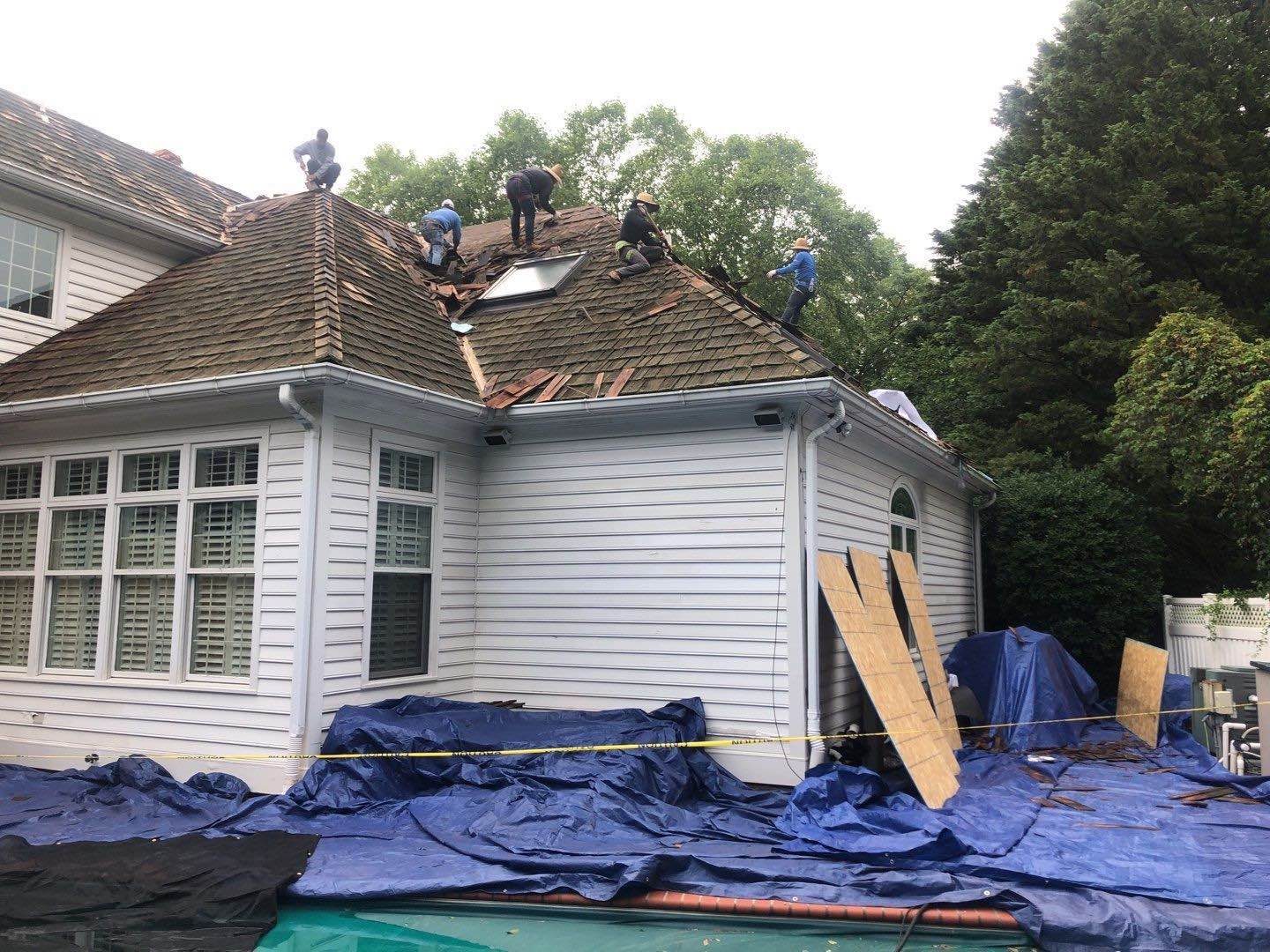
What tells us it's time for wind damage repair
- Shingles lifted but still attached
- Creases running horizontally across shingles
- Ridge cap displaced
- Rake edge or drip edge pulled loose
- Shingles from your roof in the yard
What the work actually involves
Here's what goes into it - check the seal strip slope by slope, look for creasing at the nail line, reset or replace lifted courses, re-secure ridge cap, rake edge and flashing that wind worked loose.
The work is photographed as it happens, so the hidden layers are on record for you. The layers buried under the finished shingles are the ones that decide the life of the roof.
Where we do this work
We cover the metro on both sides of the river - St. Louis City and County, St. Charles County, Jefferson County, and Madison and St. Clair County in Illinois. Offices in Maryland Heights, Chesterfield, Festus and Edwardsville.
Related pages
O'Fallon roofing
Local conditions and what we find on roofs there.
Every city we cover
The full metro on both sides of the river.
How the job runs
From the first call to the magnet sweep at the end.
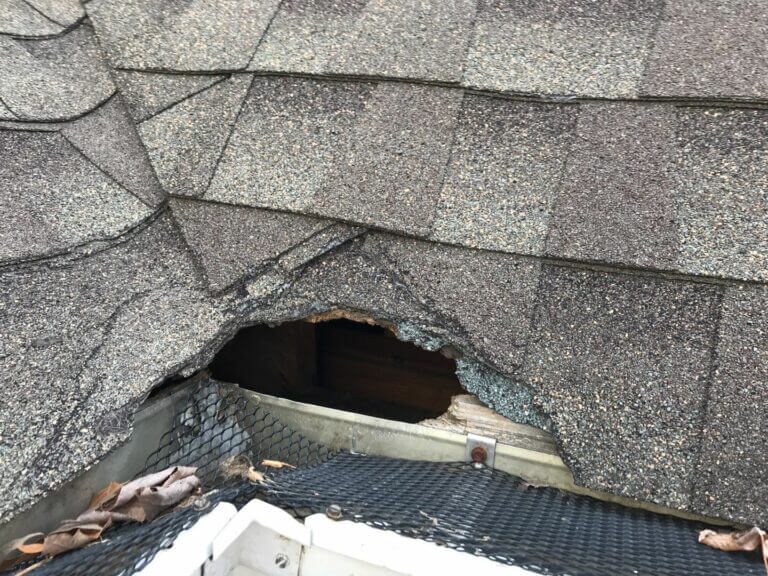
Where wind takes a roof apart, and why it starts at the edges
Wind does not press evenly across a roof. It concentrates, and it concentrates in the same places every single time.
Air moving over a roof accelerates at the corners, the rake edges and the ridge, and what it creates there is lift rather than pressure. That is why damage nearly always begins at a perimeter and works inward instead of starting out in the middle of a slope. When we inspect after a blow, we start at those edges and work toward the field.
Roof geometry matters more than most homeowners expect. A hip roof, pitched on all four sides, sheds wind considerably better than a gable, which presents a flat vertical wall to a crosswind. Gable-end houses take more damage in the same storm on the same street, and the failure usually shows first at the rake where the starter course sits.
Wind ratings are real but heavily conditional. A shingle rated to a given speed earned that number installed exactly to specification, with the correct fastener count in the correct nail line, and fully sealed. An under-nailed roof carries no meaningful rating at all, whatever the bundle wrapper claimed at the supply house.
Sealing is seasonal, which surprises people. The adhesive strips on asphalt shingles bond with heat, so a roof installed in late fall may not fully seal until the following spring, and a strong wind inside that window can lift shingles that were installed perfectly well. It is also why a repair done in cold weather gets hand-sealed rather than left to bond on its own schedule.
Trees are the other half of the equation here. Mature canopy over a house is worth having, but limbs abrading a slope in a sustained wind strip granules in a distinctive fan-shaped pattern, and a limb strike can crack decking without disturbing a single shingle in any way that shows from the ground.
Repair scope follows seal, not appearance. If the field is still bonded and the damage sits along one edge, the repair is genuinely local and priced that way. If tabs release under light hand pressure across several slopes, patching the corner you can see is money spent on a roof that has already let go everywhere else.
Wind Damage Roof Repair questions
What happens to my yard and landscaping?
Do I need to be home?
Not for the work. We would like you at the walkthrough at the end to go over what was repaired.
How far out do you travel?
What warranty comes with it?
Our lifetime workmanship warranty on the repair plus the manufacturer's coverage on the shingles installed.
How do I know you are showing me real damage and not a sales pitch?
Free wind damage repair estimate
Fill this out and we'll call you back. If water is coming in right now, phone us instead so we can move faster.
Need A Roofer In St. Louis?
One free inspection replaces a week of guessing. Photos of the real condition and a written price, no obligation.