
Roof Ventilation in St. Louis, at a glance
The work includes balance the system - intake at the soffit must match exhaust at the ridge - because a ridge vent with blocked soffit intake pulls conditioned air out of the house instead of air through the attic. Someone answers the phone at (314) 429-6000 at any hour.
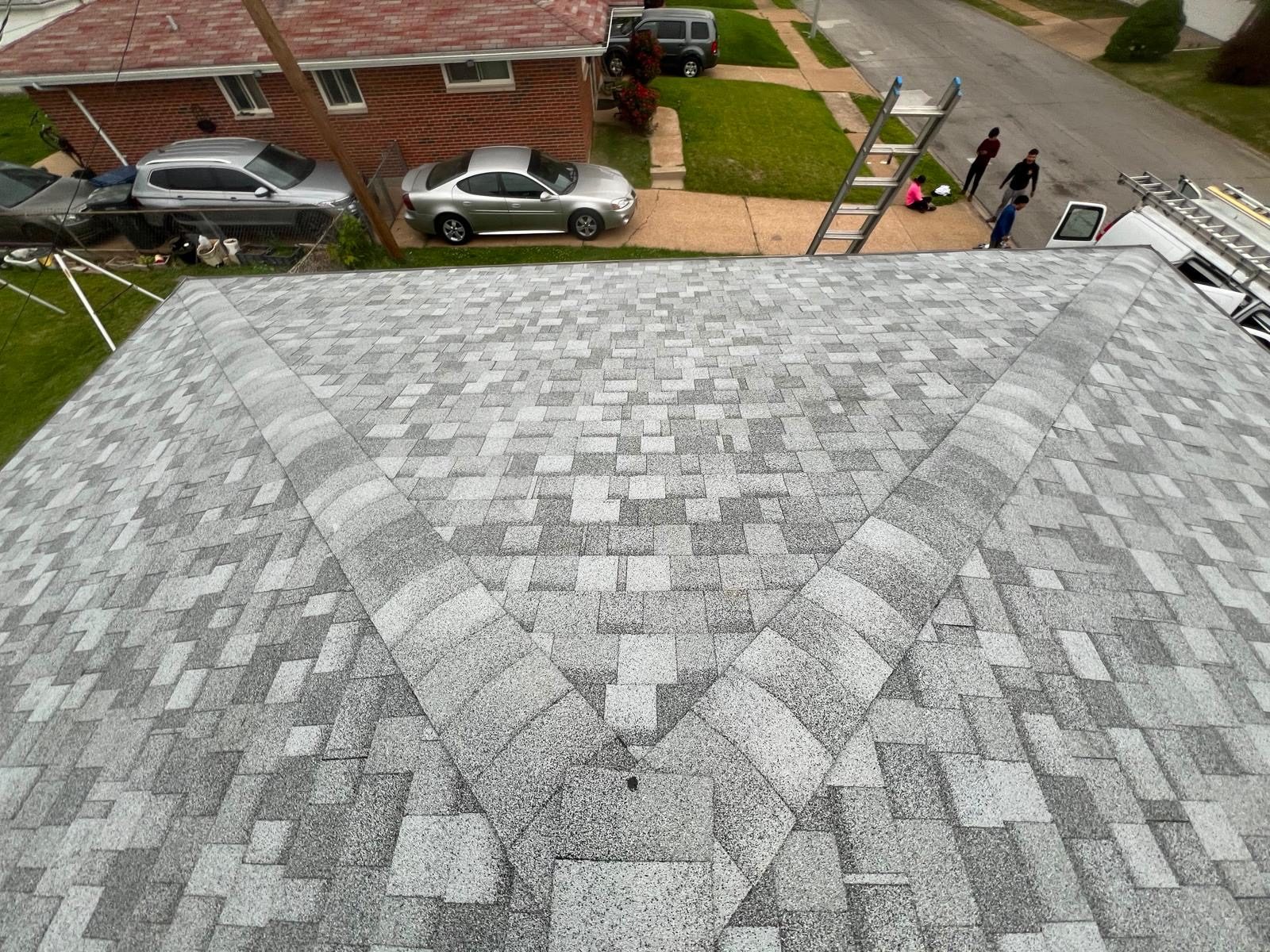
What tells us it's time for roof ventilation
- Attic hot enough to be unusable in summer
- Frost on the underside of the decking in winter
- Shingles aging faster on one slope
- Ice dams at the eaves
- A ridge vent with painted-over or blocked soffit intake
Our method, step by step
No mystery to it. Balance the system - intake at the soffit must match exhaust at the ridge - because a ridge vent with blocked soffit intake pulls conditioned air out of the house instead of air through the attic.
Every component goes on to manufacturer spec, and we would sooner explain why a step matters than drop it to trim a few hundred dollars from the price.
Where we do this work
We cover the metro on both sides of the river - St. Louis City and County, St. Charles County, Jefferson County, and Madison and St. Clair County in Illinois. Offices in Maryland Heights, Chesterfield, Festus and Edwardsville.
Related pages
Town and Country roofing
Local conditions and what we find on roofs there.
Every city we cover
The full metro on both sides of the river.
How the job runs
From the first call to the magnet sweep at the end.
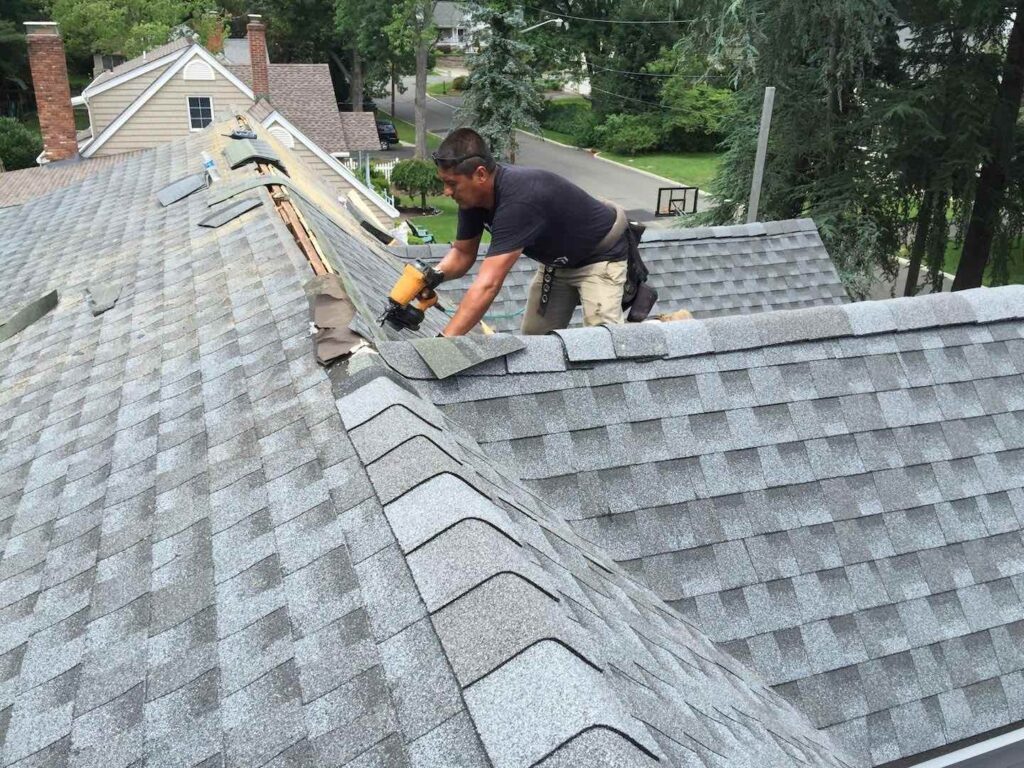
Intake and exhaust, and the arithmetic behind it
Attic ventilation is the cheapest thing on a roof and the most commonly gotten wrong.
An attic needs air moving through it in both seasons, for two different reasons. In summer, trapped heat cooks the shingles from underneath and shortens their service life, driving cooling costs while it does. In winter the problem is moisture: a household puts a surprising volume of water vapor into the air, it rises, and where it condenses on cold decking you get frost on the underside of the sheathing, then damp insulation, then mold and eventually rotten deck.
It works as a pair. Exhaust near the ridge lets hot, moist air out. Intake at the soffit lets replacement air in. Neither works alone, and intake is the half that gets neglected, because it sits under the eave where nobody looks.
The common rule of thumb is one square foot of net free ventilating area per 150 square feet of attic floor, split roughly half at intake and half at exhaust, with intake never less than exhaust. Net free area is the actual open area after the screen and louver, not the size of the hole cut. A vent's rated figure is printed on it, and it is always smaller than the opening.
Here is the failure we find constantly: a ridge vent on a house whose soffit intake is blocked. Sometimes the soffits were painted shut, sometimes insulation was blown over them during an energy upgrade, sometimes there was never any intake to begin with. A ridge vent with no intake below it does not stop working. It starts pulling replacement air from inside the house, through every ceiling gap and can light, dragging conditioned air and household humidity up into the attic. That is worse than an unvented attic, and it turns up on a utility bill.
The other one is mixing exhaust types. A ridge vent plus powered fans plus gable vents on one attic lets the system short-circuit, because the ridge vent pulls from the nearest gable opening instead of from the soffits and the far end of the attic never moves air at all. Pick one exhaust strategy and let it work.
Ice damming at the eaves is very often a ventilation and insulation problem wearing a roofing costume.
Roof Ventilation questions
How soon can you start?
Ventilation work schedules quickly since it is rarely an emergency, though we prioritize it when an attic is actively accumulating moisture.
Will insurance pay for this?
Ventilation problems are almost never a storm claim. They are a design or installation issue, and we will tell you that rather than encouraging a claim that gets denied.
Are your crews employees or subcontractors?
Our own crews. Ventilation is where a lot of contractors guess, and getting intake and exhaust balanced correctly is not guesswork.
What happens to my yard and landscaping?
Do I need to be home?
Access to the attic is helpful, since half of a ventilation assessment happens from underneath rather than on the roof.
Free roof ventilation estimate
Fill this out and we'll call you back. If water is coming in right now, call us instead so we can move faster.
Need A Roofer In St. Louis?
One free inspection replaces a week of guessing. Photos of the real condition and a written price, no obligation.