
Roof Insurance Claims Help in St. Louis, at a glance
The work includes document damage before the claim is filed. Someone answers the phone at (314) 429-6000 at any hour.

Signs you need insurance claim help
- A storm dated within the last year
- An adjuster's scope that seems short
- A denial you don't understand
- Damage you can't see from the ground
- A contractor asking you to sign before the claim settles
What you're paying for with insurance claim help
What's included: document damage before the claim is filed, write a scope that matches the actual roof, meet the adjuster on site, and handle supplements when the first scope misses code items or hidden damage.
If the decking turns out to be rotten once it is exposed, work pauses so you can see it before we replace anything. No surprise line items appearing on the final invoice.
Where we do this work
We cover the metro on both sides of the river - St. Louis City and County, St. Charles County, Jefferson County, and Madison and St. Clair County in Illinois. Offices in Maryland Heights, Chesterfield, Festus and Edwardsville.
Related pages
Clayton roofing
Local conditions and what we find on roofs there.
Every city we cover
The full metro on both sides of the river.
How the job runs
From the first call to the magnet sweep at the end.
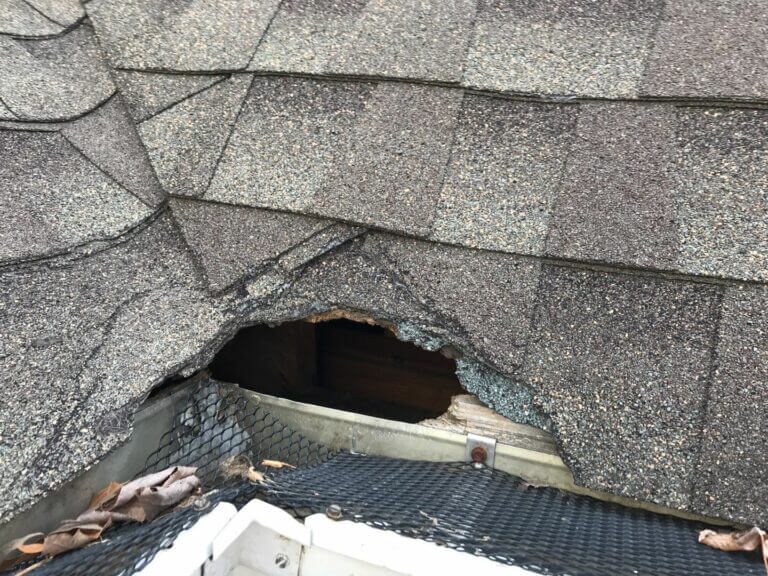
How a roofing claim actually moves, from first call to final check
The process is more predictable than most homeowners expect, and knowing the sequence keeps you from making the two or three mistakes that cost real money.
Document before you file. A claim is a factual argument and the facts are photographs. We inspect, chalk test squares, photograph every slope and the soft metals, and fix the date of loss against the storm record for that address. Filing first and gathering evidence afterward puts you in the weaker position for the rest of the process.
Know what is covered. Carriers pay for sudden damage from a dated event. They do not pay for wear, age, manufacturing defect or deferred maintenance. Most denials we see are not a carrier being difficult, they are a roof that aged out being presented as a storm loss, and we would rather tell you which one you have before you pick up the phone.
The adjuster visit is the hinge of the whole thing. We meet them on the roof, not in the driveway and not over email. An adjuster working a metro after a hail event may look at a dozen roofs that day, and the difference between a full approval and a partial one is often whether somebody walked the slopes alongside them and pointed at the test squares.
Understand the two-check structure, because it catches people out. Most claims pay actual cash value first, holding back depreciation, then release that recoverable depreciation once the work is complete and invoiced. The second check is not a bonus and it is not optional paperwork. It is the remainder of your settlement, and releasing it requires documentation we provide.
Your deductible is yours. Any contractor offering to waive it, eat it, or bury it in the invoice is proposing insurance fraud and putting your claim and their license in the same basket. We will not do it, and anyone who volunteers to is telling you something useful about how they work.
Supplements are routine, not a red flag. When the roof comes open and conditions appear that the original scope did not capture, rotten decking, an unexpected second layer, code-required ventilation or ice-and-water membrane, those get documented and submitted as a supplement rather than quietly absorbed or added to your bill.
Roof Insurance Claims Help questions
What happens to my yard and landscaping?
Do I need to be home?
Be there for the adjuster meeting if you can. You do not need to be home for the work itself, but the adjuster meeting is where the scope gets settled.
How far out do you travel?
What warranty comes with it?
A lifetime workmanship warranty from us plus the manufacturer's material coverage, documented in a form you can hand to your carrier or a future buyer.
What proves the damage is real and not a sales tactic?
Free insurance claim help estimate
Fill this out and we'll call you back. Leaking right now? Skip the form and call so we can move faster.
Need A Roofer In St. Louis?
One free inspection replaces a week of guessing. Photos of the real condition and a written price, no obligation.