
Chimney Flashing Repair in St. Louis, at a glance
A chimney leak is a metal problem, and the reason it keeps coming back is that somebody kept fixing it with a tube of sealant instead of new flashing. Done correctly it is a one-time repair that outlasts the shingles around it. Call (314) 429-6000 for a free inspection.
Why St. Louis chimneys leak
The brick is rarely the problem. The metal around it usually is.
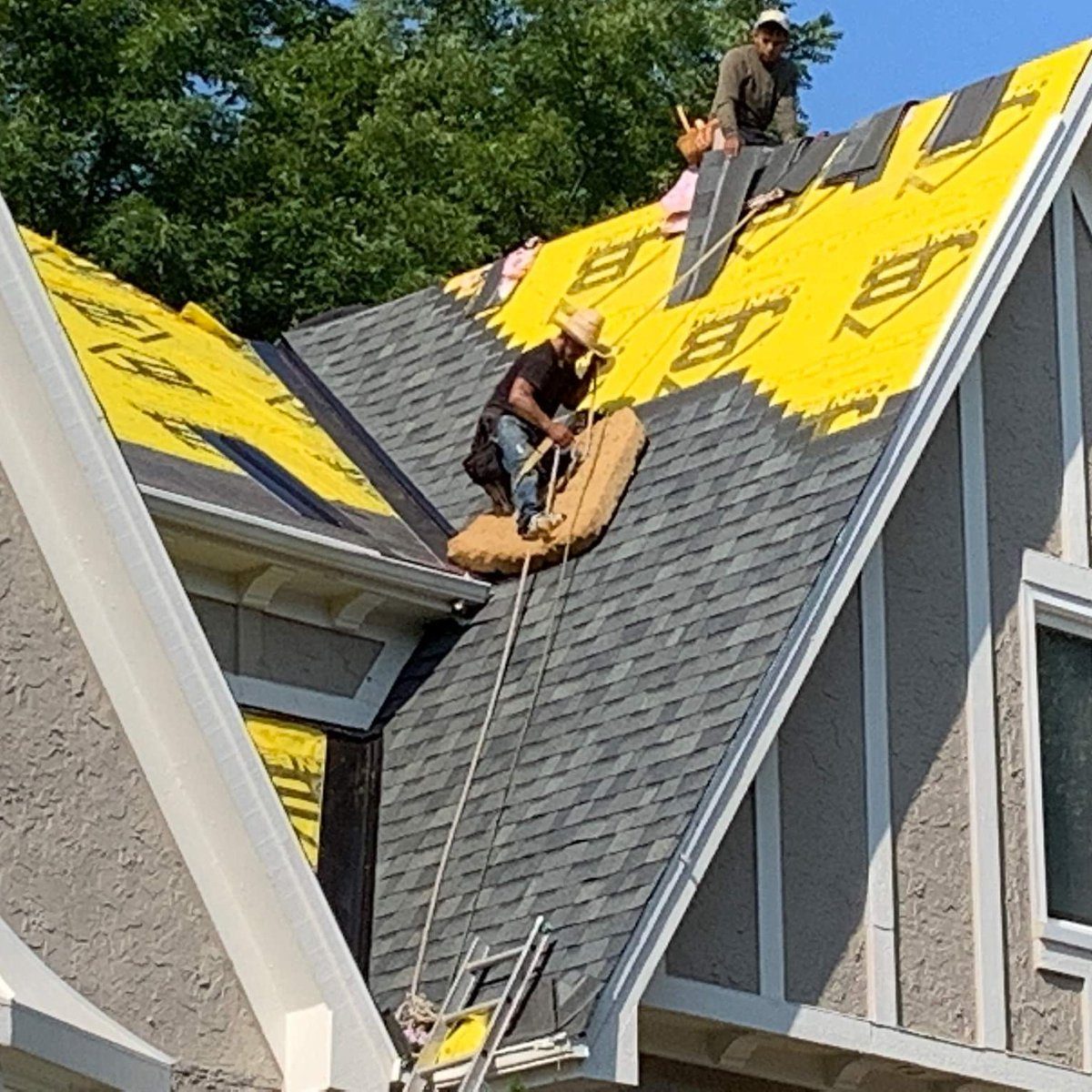
A correct chimney detail is two layers. Step flashing goes in one piece per shingle course, each piece lapped by the next, running up both sides of the stack. Counterflashing then covers the top of the step metal and is set into a cut in the mortar joint so water cannot get behind it. An apron handles the downslope face and, on wider chimneys, a cricket behind the stack splits the water so it never pools against the brick.
What we find on older St. Louis houses instead is a bead of roof cement smeared where the shingle meets the brick. It sheds water for two or three seasons, then cracks in the cold, and the crack is invisible from the ground. Every rain after that sends a little water into the framing next to the chimney, which is why the ceiling stain shows up in a room that has nothing to do with the fireplace.
What a proper repair includes
Step flashing
New metal, one piece per course, woven into the shingles on both sides of the stack rather than laid over them.
Counterflashing
A clean reglet cut into the mortar joint, metal seated into the cut and sealed, so the top edge is protected instead of exposed.
Apron and saddle
New apron on the downslope face, and a framed cricket behind wide chimneys so water is split rather than trapped.
Decking check
The boards next to a long-term chimney leak are often soft. We look before we close it up, and replace what has gone.
How the repair runs
Free inspection
Chimney, flashing, mortar condition, surrounding field and the attic side where the water lands.
Written scope and price
What metal goes in, whether a cricket is needed, and what happens if the decking is soft. Priced before the work starts.
Strip and rebuild
Courses removed beside the stack, new step and counterflashing installed, shingles woven back in.
Walk it with you
Photographs of the finished detail, because most of it will be invisible from the ground once it is done.
Signs your chimney flashing is finished
- A brown ring on the ceiling near an interior wall that carries a chimney chase
- White chalky staining on the brick inside the attic, which is mineral salt left by water
- Rust streaks on the metal beside the chimney, visible from the ground with binoculars
- Roof cement cracked or peeling where the shingles meet the brick
- Damp framing or dark decking next to the chase when you look in the attic with a light
- A leak that only appears in wind-driven rain from one direction
Any one of those is worth a free inspection. Chimney leaks are patient, and the repair gets more expensive the longer the framing stays wet.
Chimney flashing questions
Why does my chimney leak when the rest of the roof is fine?
A chimney interrupts the roof plane, so water has to be redirected around it by metal. Caulk does that job for a couple of years. Step flashing and counterflashing cut into the mortar joint do it for decades.
What is a cricket and does my chimney need one?
A cricket is a small framed ridge behind the chimney that splits water around it. Wide chimneys on the upslope side of a roof need one, and plenty of St. Louis houses were built without it and have been holding water behind the brick ever since.
Can you repair the flashing without touching the brick?
Counterflashing has to be set into a cut in the mortar joint to work. We cut a clean reglet, seat the metal and seal it. If the mortar itself is failing, that is masonry work and we will say so rather than pretend metal fixes it.
Is chimney flashing covered by insurance after a storm?
When wind lifted or tore the metal, often yes. Deterioration from age is normally excluded. We document which one it looks like and let the carrier make the call.
How much of the roof has to come off?
Only the courses adjacent to the chimney in most cases. A flashing repair is a targeted job, not a reason to replace a roof that has years left.
Free chimney leak inspection
Describe where the staining shows up inside and we will call you to schedule a look. It costs nothing.
Chimney Leaking In St. Louis?
Free inspection of the flashing, the mortar and the attic side, then a written price for a permanent fix.