
Roof Decking Repair In St. Louis, at a glance
Roof decking repair in St. Louis usually gets discovered mid-tear-off, which is why an honest estimate quotes a fixed per-sheet rate instead of hiding the cost in a vague allowance. We photograph every bad sheet before it's covered. Free inspection and written estimate at (314) 429-6000, answered any hour.
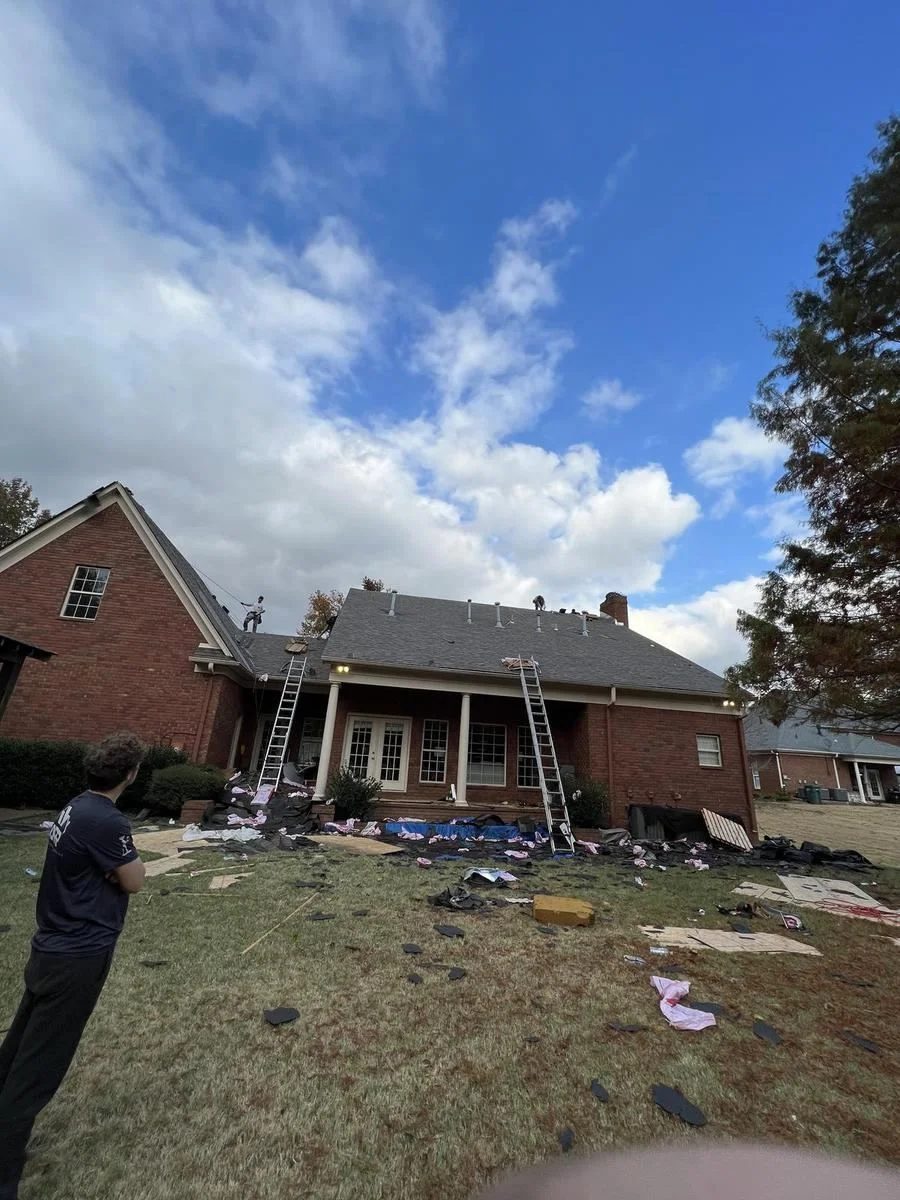
Where St. Louis decks go bad
Three places, over and over. The eaves, where ice damming and years of gutter overflow have kept the last two feet wet. Around chimneys, where failed counter-flashing has been dripping quietly into the deck instead of into the house. And under valleys, where a shallow-pitch valley held debris and stayed damp between storms.
The rest of the roof is usually fine. That surprises people who expect the whole deck to be condemned. Most tear-offs need somewhere between zero and six sheets, and the honest ones tell you the count with pictures.
What good deck work includes
None of this is optional if the roof above it is going to hold.
- Every sheet walked and sounded after tear-off, not spot-checked
- Soft or delaminated sheathing cut back to the rafters, not patched over
- New sheathing matched to existing thickness so the plane stays flat
- Wide-gap plank decking sheeted with plywood for a proper nail pattern
- Photographs of each replaced area, shared before it's covered
- Per-sheet pricing stated in the original written estimate
- Rotted fascia and drip edge addressed at the same time
- Ventilation checked, because trapped attic moisture is what rots decks from below
How a deck repair actually goes
Inspection and estimate
We note visible sagging and attic evidence, and we state the per-sheet rate in writing.
Tear-off
Old roof comes off completely. Only then can anyone see the deck condition honestly.
Mark and photograph
Bad areas are chalked, photographed and counted with you or sent to your phone.
Replace and dry in
New sheathing goes down, then underlayment the same day. The roof never sits open overnight.
Why we won't roof over a soft deck
Shingles hold because the nail holds. A nail in punky sheathing has maybe a third of its rated withdrawal strength, and it lets go in the first real wind event. The roof looks perfect for two years and then loses a slope in a spring storm, and the manufacturer's wind warranty won't cover a nailing surface that was never sound.
Roofing over soft deck is also how a small rot problem becomes a framing problem. Water keeps getting in, the rafter tails go next, and now it's a carpentry job instead of a four-sheet repair.
If someone bid your roof with no mention of decking at all, ask them what happens when they find rot. The answer tells you a lot. Our process.
Deck repair at a glance
| Service | Roof decking and sheathing replacement |
|---|---|
| Area | St. Louis City, St. Louis County, St. Charles County, Metro East |
| Typical count | Zero to six sheets on an average tear-off |
| Common causes | Ice damming at eaves, failed chimney flashing, debris-packed valleys, poor attic ventilation |
| Pricing | Fixed per-sheet rate stated in the written estimate |
| Evidence | Photographed before the new roof covers it |
| Warranty | Lifetime workmanship warranty on the completed roof |
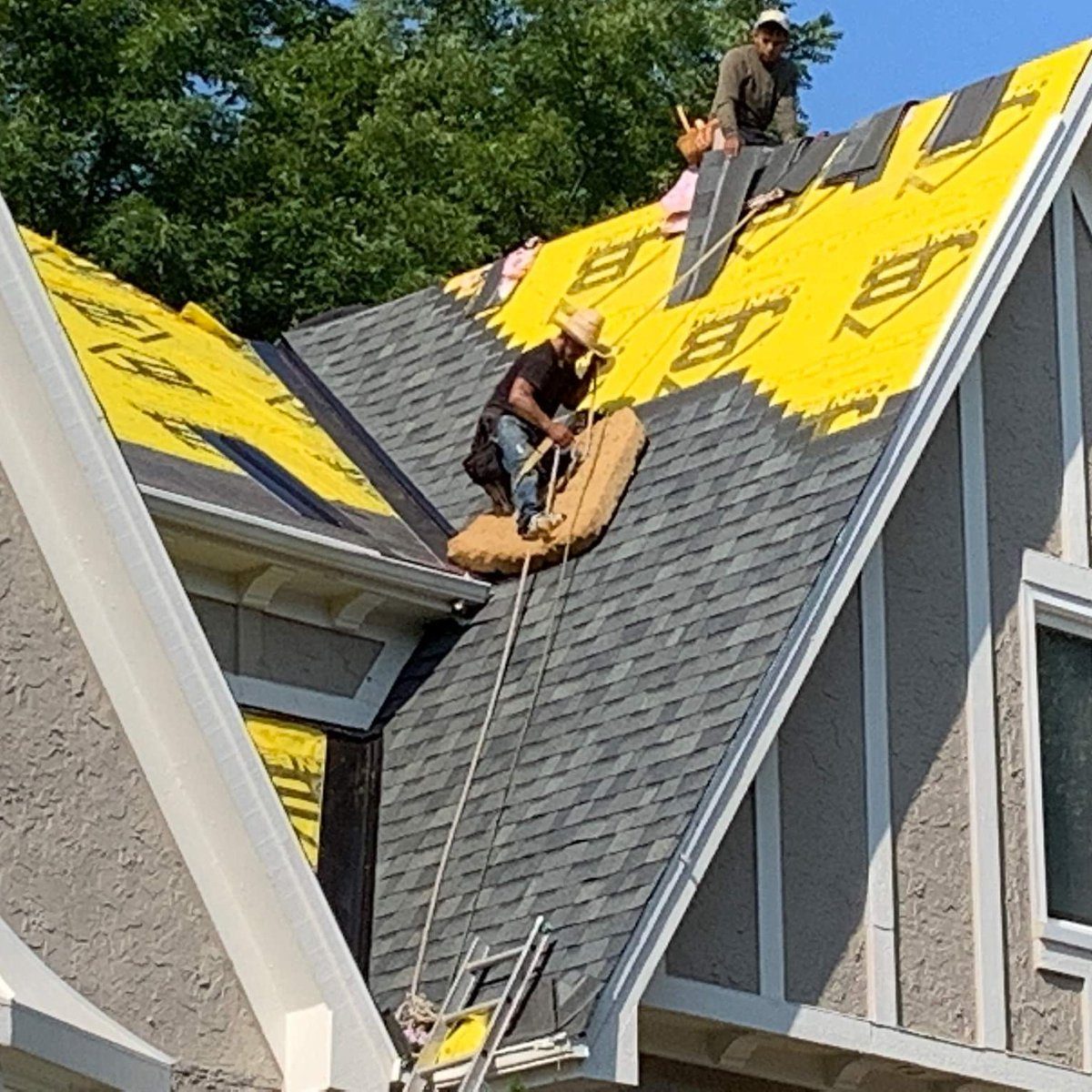
Ventilation is the long-term fix
Most decks that rot from below were rotting because the attic never dried out. Warm moist air rises out of the house, hits cold sheathing in January, and condenses. Do that for fifteen winters and the underside of the deck goes dark and soft even though the roof above it never leaked.
Fixing the deck without fixing the airflow means doing it again. We check intake at the soffit as well as exhaust at the ridge, because ridge vent with blocked soffits does almost nothing. More on attic ventilation.
Roof decking questions
How do I know if my roof decking is rotten?
From inside the attic, look for dark staining, daylight at seams, or sheathing that flexes when pressed. From outside, a slope that ripples or dips between rafters is the classic sign. Neither is guaranteed, which is why tear-off is the honest test.
Why can't you tell me the deck cost before you start?
Because nobody can see under shingles. What we can do is state the per-sheet price in the estimate up front, so the only variable is a count you'll see photographed, not a number invented on the day.
What's the difference between plank decking and plywood?
Older St. Louis houses have 1x6 or 1x8 planks with gaps between them. Modern nailing patterns need continuous support, so where gaps are wide we sheet over the planks with plywood rather than nail into open air.
Can you replace just part of the deck?
Yes, and usually that's what happens. Bad sheets get cut out at the rafters and replaced. There's no reason to sheet a whole roof when four sheets at the eave are the problem.
Does insurance pay for decking?
Sometimes, when the deck damage came from the same covered event. Ordinary rot from age is a maintenance issue and carriers treat it that way. We'll document either way so the claim is decided on facts.
Free St. Louis roof deck inspection
Tell us what you're seeing, sagging, staining, soft spots underfoot, and we'll come look at no charge.
Cities where we do this work
Deck repair comes up on tear-offs all over the metro:
Worried About What's Under Your Shingles?
A free inspection tells you whether the deck is sound before you pay anyone to roof over it.