
Insurance roof coverage, at a glance
Most St. Louis homeowners policies cover roof damage from sudden events like hail, wind and falling limbs, and exclude wear, age and poor maintenance. Your own policy wording decides the details, so read your declarations page and talk to your agent. We can tell you what the roof shows. Call (314) 429-6000.
What is usually covered and what isn't
Usually covered
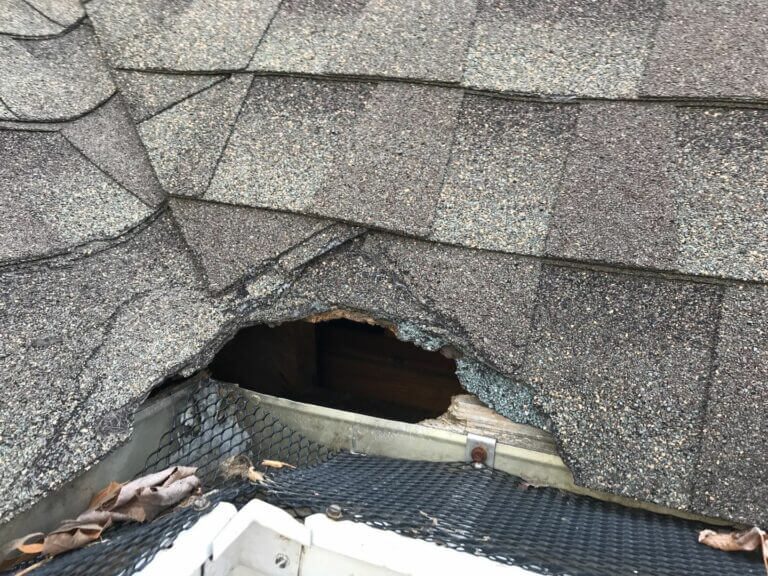
Hail bruising, wind-torn or missing shingles, a tree or limb through the roof, and the interior damage that comes with them.
Usually not covered
Shingles worn out by age, leaks from flashing that was never maintained, installation mistakes, and slow leaks that went on for months.
Many claims have a bit of both. A twenty-year-old roof can still have real hail damage. The adjuster's job is to separate storm damage from wear, and clear photos of fresh damage make that easier.
Replacement cost or actual cash value
Policies pay in one of two ways. A replacement cost policy pays to replace the damaged roof with a comparable new one, often in two checks: the first up front, and the held-back depreciation after the work is done and documented.
An actual cash value policy pays what the old roof was worth at the time of the storm, after depreciation. On an older roof that can be a lot less than the cost of a new one. Some policies use actual cash value for roofs only, so check the roof section of yours.
The difference shows up when the check arrives. Knowing which kind of policy you have before the adjuster visits helps you plan for what the claim will and won't pay, and whether you'll need to cover part of the new roof yourself.
Your deductible
Your deductible is the part of the claim you pay. Some policies have a separate wind and hail deductible set as a percentage of the home's insured value rather than a flat dollar amount, which can make it larger than people expect.
The deductible is yours to pay. Be careful with any contractor who offers to cover or waive it. That puts the claim, and you, in a bad spot.
Before a storm season, it's worth pulling out your policy and finding three things: whether the roof is covered at replacement cost or actual cash value, how the wind and hail deductible is figured, and how long you have to report damage. Ten minutes with the declarations page now saves a lot of guessing after a hailstorm.
How a roof claim usually goes
Free inspection
We look at the roof and tell you whether the damage looks like it supports a claim.
File the claim
You contact your insurance company. We provide photos if they help.
Adjuster visit
The adjuster inspects the roof. We can be there to walk it with them.
Scope agreed
The insurer issues an estimate. If items we documented are missing, we send photos for review.
Work and paperwork
We do the work and provide the final documents your insurer needs to close the claim.
Insurance roof coverage questions
Will filing a claim raise my premium?
What if my claim is denied?
Does insurance cover a roof leak?
Do I have to use the insurance company's contractor?
Is your inspection free?
Free storm damage inspection
Fill this out and we'll call you back. If water is coming in right now, phone us instead so we can move faster.
Related reading
More on storms and claims:
Need A Roofer In St. Louis?
One free inspection replaces a week of guessing. Photos of the real condition and a written price, no obligation.