
Roof Underlayment, at a glance
Underlayment is the second barrier under your shingles, and St. Louis weather tests it every year with wind-driven rain and ice at the eaves. A good shingle over poor underlayment will still leak once that shingle is lifted or damaged. That's why we name the underlayment on every replacement estimate we write.
Felt versus synthetic
Asphalt felt
The traditional choice: a mat soaked in asphalt. It's inexpensive and familiar, but it tears under foot during installation and wrinkles if it gets wet before the shingles go on.
Synthetic underlayment
Woven polymer sheets that are lighter and much harder to tear. They lie flat, give crews better footing, and handle a day of exposure if weather interrupts a job.
We use synthetic underlayment on our shingle replacements. It costs a little more than felt and holds up better during installation and afterward.
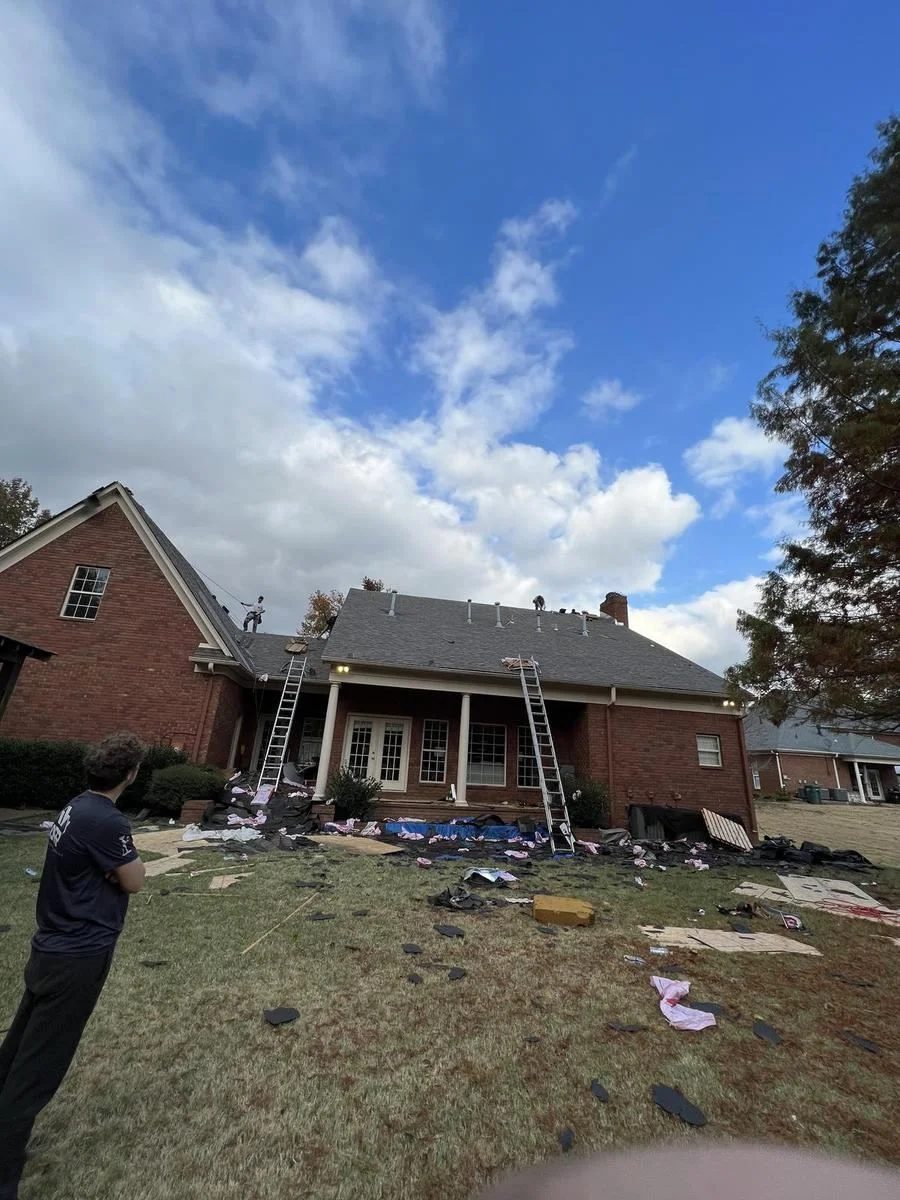
Where ice and water barrier goes
Ice and water barrier is a self-adhering membrane that seals around nails. It belongs where water is most likely to sit or back up.
- Along the eaves, where ice dams form in winter
- In every valley, where two slopes send water together
- Around chimneys, skylights and sidewalls
- On low-slope sections where shingles drain slowly
How far up from the eave it runs depends on the roof pitch and local code. We follow both, along with the shingle manufacturer's instructions, since the warranty depends on correct installation. Our page on ice dams explains why the eave detail matters so much here.
Signs underlayment has failed
You usually learn underlayment has failed from inside the house. Stains that appear only during wind-driven storms, damp decking around nails in the attic, or rot along the eaves above the gutters all suggest water is getting past the shingles and nothing underneath is stopping it.
Underlayment can't be replaced without taking off the shingles above it. If a small area is affected, we can strip and re-lay that section. If the problem covers the whole roof, it becomes part of a replacement conversation, and we'll show you photos to back that up.
Why we don't skip the details
Underlayment and ice barrier are easy places to save money on a bid, because the homeowner can't see them once the shingles are on. One estimate might list full synthetic coverage with ice barrier in every valley, while another lists felt and leaves the valleys to the shingles alone. The prices will differ, and so will how the roof handles a wind-driven storm in its tenth year.
When you compare estimates, ask each contractor to name the underlayment product, say where the ice and water barrier goes, and state whether the drip edge goes over or under it at the eaves. If an estimate doesn't say, ask. A roofer who does it right won't mind putting it in writing. Ours already does, and we'll walk you through every line before you sign.
Underlayment on our estimates
| Field underlayment | Synthetic, full deck coverage |
|---|---|
| Eaves | Ice and water barrier per pitch and code |
| Valleys | Ice and water barrier, full length |
| Penetrations | Self-adhering membrane around chimneys, skylights and walls |
| Installed by | John Beal Roofing, Owens Corning Platinum Preferred Contractor |
| Workmanship warranty | Lifetime |
Questions we hear
Can I see the underlayment before the job?
Is synthetic underlayment worth the extra cost?
Does underlayment affect my shingle warranty?
Can you check my underlayment without tearing off the roof?
Do you replace underlayment during a repair?
Free roof inspection in St. Louis
Fill this out and we'll call you back. If water is coming in right now, phone us instead so we can move faster.
Need A Roofer In St. Louis?
One free inspection replaces a week of guessing. Photos of the real condition and a written price, no obligation.